-
I enjoy browsing in the Iliad Bookshops paperback section because you find so many interesting covers. Here are four recent covers that caught my eye. The SATYR cover is pretty strange. That smudge at the right of the satyr character part of the actual cover. I like the design of A TOWN OF MASKS and the lurid colors make me want to find out what the story is behind the cover. Be sure to click the thumbnail for the larger image.


-
Although December is not one of my favorite months (too involved a story to tell you why), I do like looking through end-of-the-year lists, especially of books. One of my favorite book blogs is "Stuck in a Book". I love the fact that not one of the books listed on the blog comes from 2013. Not that there aren't good books published this last year (I'll be listing mine soon), but the list at Stuck in a Book is more personal favorites of the year. That's how I like to look at the "Best of" lists that come out at the end of the year.
I'd love to read all of the books on the list, but I decided to pick one: Phantoms on the Bookshelves by Jacques Bonnet. I've always been fascinated with people who have large book collections and this book looks like a delight.
I also decided to take up the "A Century of Books" challenge that Stuck in a Book issued to readers. The goal is to read a single book from each year of the 20th century. I'm going to try to do it in a year, but with all of the other reading interests I have it may take a little longer. So far here is my list for the years 1900 to 1010. See my complete list on the side panel "My Century of Books" page.
the stuck-in-a-book.blogspot.com challenge
My Century of Books list (first decade):
1900 The Wallet of Kai Lung by Ernest Bramah
1901 The Psychopathology of Everyday Life by Sigmund Freud
1902 The Sport of the Gods by Paul Laurence Dunbar
1903 Ideas of Good and Evil by W.B. Yeats
1904 Napoleon of Notting Hill by G.K. Chesterton
1905 The Return of Sherlock Holmes by Arthur Conan Doyle
1906 Botchan by Natsume Soseki
1907 Dead Love Has Chains by Mary Elizabeth Braddon
1908 Wind in the Willows by Kenneth Grahame
1909 Three Lives by Gertrude Stein
1910 Anarchism and Other Essays by Emma Goldman

Most of these titles I'll be reading in the e-book format, but a couple I already have in my library. My sources will be Gutenberg.org and OpenLibrary.org for the e-books and primarily the Iliad Bookshop for the p-books.
The wikipedia has a very nice page on events and book releases for each year of the century. It was fascinating to follow the links and read up on authors and titles. Difficult to decide which book to choose for some years, which is why there are two titles listed for 1905 and 1907.
Thanks to Stuck in a Book for the idea. Look for my reviews here of each title and we'll see if I'm up to the challenge!
-
We just got in several boxes of vintage paperbacks at the Iliad Bookshop today. As I was boxing them up, I photographed the most interesting covers. I'll be adding these to my "Book Covers" page (actually a link to my Flickr set of book covers) as well. I really like the Enderby and City of a Thousand Suns covers (Stoned is pretty amazing, too). Like a dope, I didn't check the cover artists listed in the books, so if anyone knows, please post in the comments section. Click the thumbnail for a larger version to download.


-

Book trailers are mostly pretty bad, but this one for Scott McClanahan's CRAPALACHIA is remarkable in many ways. It's poetic, creepy, gritty and very, very personal. Caught this originally on Twitter which took me to the Vimeo post of the trailer. Two Dollar Radio is a favorite publisher of mine (see The Orange Eats Creeps review I did here), so the combination of this weird/wonderful trailer and the publisher pulled money out of my wallet like a magnet.
I'll be doing a review as soon as I get the book from the publisher and have a chance to read it. In the meantime, here's the amazing trailer:
Scott McClanahan CRAPALACHIA Book Trailer from Holler Presents on Vimeo.
Scott McClanahan's book, CRAPALACHIA, available from Two Dollar Radio. -

I buy both printed books and digital ebooks regularly. Every so often I'll share what books I've recently purchased with Booklad readers. I'll include links to each edition so you can find out more on any specific title and make a few comments on the book. I almost always read the introductions or first chapters of books I purchase. It's like sneaking a little bit of the frosting from a birthday cake.
Most of these books were purchased at the used bookstore where I work during the day: the Iliad Bookshop. A couple titles I ordered off of the internet (primarily Amazon.com).
 The Assistant by Bernard Malamud, Farrar, Straus & Giroux,reprint 2003. Introduction by Jonathan Rosen.
I've been enchanted with Malamud ever since I read his first collection of stories last year, The Magic Barrel, but have never read one of his novels. I sneaked a read of the first chapter and, God, it's good. I can't wait to read this novel.
 My Struggle, Book One by Karl Ove Knausgaard. Archipeligo Books, 2012. Translated from the Norwegian by Don Bartlett.
Not sure where I came across this author, but I'm half-way through reading and it's a brilliant autobiography written as fiction (roman a clef?). The writing is so good and the scenes are so poetic and alive. I'll be doing a full review of this book when I'm done.
 Silent Cinema by Brian J. Robb. Kamera Books, 2007. DVD included.
Found this little gem in our silent film section. Enjoyed the introduction, so I'm going to add it to my growing library of silent cinema books. DVD has 193 minutes of extracts from classic silent films. Kamera Books, a UK publisher, has got a lot of interesting titles they are publishing.
 The Music and Art of Radiohead, edited by Joseph Tate. Ashgate Publishing, UK. 2005.
I've become addicted to the music of Radiohead (again) having listened to OK Computer and Hail to the Thief a dozen times during the last month. I'm half-way through the 12 essays in the book and they range from overly academic to very insightful (Mark B.N. Hansen's "Deforming Rock: Radiohead's Plunge into the Sonic Continuum"). The introduction, by Joseph Tate, is quite good, too.
 A Writer's Companion, 4th Edition, by Richard Marius. McGraw-Hill College, 1995.
I read a few pages of this book every night before I go to sleep. Richard Marius is a very good teacher of effective writing. Not only does he teach the subject well, but he's an incredibly good writer himself. I'm not big on "how-to" books on writing, but this one is inspiring and very practical.
 Silent Cinema: An Introduction by Paolo Cherchi Usai. Palgrave Macmillan, Revised and expanded edition, 2010.
This is a classic work on Silent Cinema. Originally titled "Burning Passions", it originated in a lecture Mr. Usai gave regarding the importance of preserving and studying silent films. This edition (beautifully designed and produced) has an excellent preface by David Robinson, himself a noted silent film historian. I'll be writing up a full review of this book once I have finished reading it. -
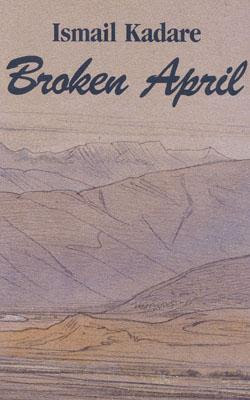
I’m always looking through articles and bibliographies on books; searching for new authors and new reading experiences. So when Caustic Cover Critic recommended Broken April in his Best-Books-of-the-Year (2009), I was intrigued.
“It’s very well written, which helps, but the underlying idea is even more fascinating. The setting is Kadare’s native Albania, where the hill-dwelling people have this mad system of honor and code of behaviour called the ‘Kanun’”.
After reading these lines from CCC, I immediately thought of the sequence in Huckleberry Finn where Huck hides in a tree and watches two families (the Grangerfords and the Shepherdsons) murder each other in revenge for even earlier killings and slights of honor. That scene and Twain’s masterfully simple prose, is a lot of what Broken April is about. The difference is that rather than being an outsider looking in at this mad code of family honor, Kadare gives you the perspective of an insider, one of the family members who is questioning the code even as he is driven to honor it.The story is simple. The central character, 26 year old Gjorg Berisha, is returning to his country village in Albania. He is forced, through the 'Kanun" code, to murder someone in another family in revenge for a previous killing in his own family. The results of his actions, which come as a surprise, places him inside of the very code he wishes he could break out of.

Ismail Kadare Kadare’s theme of how the past influences the present, is so beautifully wound into the story, that you find yourself wondering about your own life; your own family traditions. Blind belief, honor, codes of conduct without compassion, these are the things that make up Broken April. That and compelling characters who the author manages to create empathy for even as they are committing acts of evil.
“A pale young man sits down to an important meal. His brother has been murdered and he waits for a discussion about blood compensation to be over. If it fails, his life will be forfeit, gathered into the cycle of bloodshed as soon as he avenges (as he must) his brother. The provisions of the meal are complicated: eaten at noon with the murderer, it must conclude with the agreement of a blood price and a tour of the house, the male guests stamping their feet in every room to drive out the fued’s shadow. Then the young man’s father carves a cross on the murderer’s door and exchange a final reconciling drop of blood. The price is settled, and the stamping begins”.The clarity and simplicity of Kadare’s writing are what make the above passage so ominous and frightening. The thoughts and feelings of these characters caught in a murderous web of their own making are always just barely suppressed. No wonder the Shakespearean play Macbeth was a favorite of Ismail’s when he was a child. Broken April is suffused with this kind of barely controlled terror which both frightens and enthralls the reader at the same time.
This is a writer with a profound sense of the past/present and a very deep understanding of human psychology. Although the word is over-used, I think Broken April is a masterpiece that belongs alongside Kafka and Tolstoy and other writers who look sadly upon humanity at its worst in order to free us all to become our best.
I urge you to find a copy of Broken April by Ismail Kadare, or any other works by this remarkable Albanian author.
Notes and links:
- Full bibliography
- Fine forum discussion of Broken April
- Essay on translating Kadare into English
My thanks to Goodreads.com for the cover picture of Broken April.


“I have never known any distress that an hour’s reading did not relieve.” -Montesquieu